
John Taylor, the « Chandos portrait », circa 1600-10
587 BCE Jerusalem falls to the Babylonians; the Book of Lamentations is written in the decades that follow.
15 BCE – 18 AD Ovid writes the Heroides (a.k.a. Epistulae Heroidum).
1230 The Sicilian poet Giacomo da Lentini starts writing the earliest forms of the sonnet.
1250 The Tuscan poet Guittone d’Arezzo adapts the form of the sonnet and introduces the volta.
1295 The Tuscan poet Dante Alighieri publishes Vita Nuova.
1366 The Tuscan poet and scholar Francis Petrarch publishes Il Canzoniere (aka, Rerum vulgarium fragmenta).
1374 The Tuscan writer Giovanni Boccaccio completes De casibus virorum illustrium.
1380-1400 Geoffrey Chaucer writes the epic poem Troilus and Criseyde, the dream poem The Parlement of Foules and some parts of The Canterbury Tales in rhyme royal. In the same period, Chaucer also writes The Legend of Good Women.
1410 James I of Scotland writes his autobiographical poem The Kingis Quair in rhyme royal.
1431-1438 John Lydgate writes the de casibus narrative poem The Fall of Princes in rhyme royal.
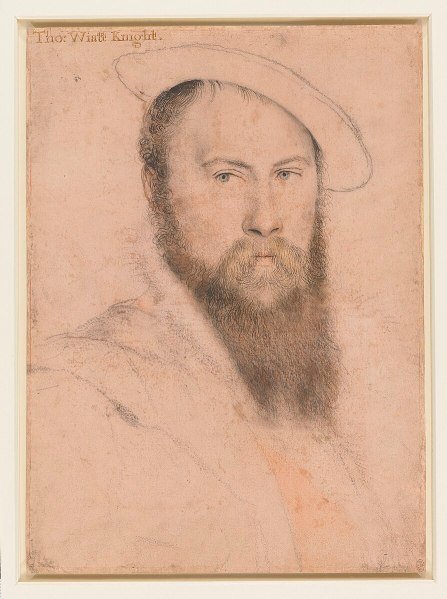
Thomas Wyatt, by Hans Holbein the Younger
1530s Thomas Wyatt’s sonnets start circulating at the court of Henry VIII and popularize Petrarchism in England. His friend, Henry Howard, Earl of Surrey, translates Petrarch’s poems in English and innovates the English form of the sonnet, later known as the Elizabethan or Shakespearian sonnet.
1553 Erasmus’s ‘Epistle to persuade a young gentleman to marriage’ is translated into English, and included in Thomas Wilson’s The Art of Rhetoric, which later becomes the most popular Elizabethan treatise on rhetoric in English.

Henry Howard, by William Scrots, 1546
1557 Ten years after his death, the poems of Henry Howard, Earl of Surrey, are published, marking the birth of the English sonnet and imposing the iambic pentameter as the poetic form par excellence in English verse.
— Richard Tottel publishes Songes and Sonettes, usually called Totell’s Miscellany, the first printed anthology of English poetry, which contains 96 sonnets by Thomas Wyatt and 40 by Henry Howard; this marks the birth of the English sonnet and imposes the iambic pentameter as the poetic form par excellence in English verse.
— John Shakespeare marries Mary Arden.
1558 Elizabeth Tudor becomes Elizabeth I, Queen of England, after the death of her sister, Mary I.
1559 The Act of Settlement separates Anglicanism from the Roman Catholic Church.
1564 William Shakespeare is born in Stratford-upon-Avon, Warwickshire, and is baptised on April 26 at the Holy Trinity Church.

Pastoral Concert, by Titian or Giorgione
1565 Arthur Golding publishes his translation of Ovid’s Metamorphoses.
1568 John Shakespeare is elected high bailiff of the town of Stratford-upon-Avon.
1570 Elizabeth I is excommunicated by Pope Pius V.
1571 William Shakespeare begins school at the Stratford Grammar School.
1572 Travelling players are banned in England, unless they are under the patronage of a nobleman; this accelerates the development of professional theatre and the building of playhouses.
1576 James Burbage builds The Theatre in Shoreditch, north of London.
— George Gascoigne publishes The Complaynt of Philomene.
1578 John Lyly publishes the romance Euphues: the Anatomy of Wit.
1579 Edmund Spenser publishes the pastoral poem The Shepeardes Calender.

Philip Sidney, by unknown artist
1580 Astrophil and Stella, a sequence of 108 sonnets by the courtier and scholar Philip Sidney, circulate in private circles, sparking off a vogue of sonnet cycles in England. The collection is eventually published in 1591, five years after Sidney’s death.
1582 At the age of 18, Shakespeare marries the 26-year-old Anne Hathaway, with whom he has three children: Susanna (born in 1583), and the twins Judith and Hamnet (born in 1584).
— An epidemic of bubonic plague breaks out in London.
1585 Shakespeare moves to London and starts a career as an actor and a playwright.
— Machiavelli’s The Prince, first published in 1513, is translated into English.
1587 Thomas Kyd publishes The Spanish Tragedy; Mary, Queen of Scots, is executed.
1588 The Spanish Armada attempts to invade England and is destroyed.
1589 Shakespeare is believed to write – or co-write – Henry VI, Part One, his first play.
1590 Edmund Spenser publishes The Faerie Queene.
— Shakespeare probably starts writing the sonnets ultimately known as the “Dark Lady” sonnets.
1591 Edmund Spenser publishes his Complaints.
1592 Samuel Daniel publishes Delia… with the Complaint of Rosamund, a two-part collection comprising sonnets dedicated to Mary Sidney, Countess of Pembroke, and sister of Philip Sidney, and a historical poem serving as a female answer to them.
— Robert Greene mentions William Shakespeare as a cocky plagiarist – an “upstart crow, beautified with our feathers.”
— Another epidemic of bubonic plague breaks out in London until 1594.

Venus and Adonis, by Titian
1593 Christopher Marlowe dies at the age of 29.
— Thomas Lodge publishes the sonnet cycle Philis along with The Tragical Complaint of Elstred.
— Shakespeare publishes the narrative poem Venus and Adonis.
1594 Shakespeare starts working exclusively with the Lord Chamberlain’s Men.
— Shakespeare publishes The Rape of Lucrece, his second narrative poem.
— Richard Barnfield publishes The Affectionate Shepheard: The Complaint of Daphnis for the Love of Ganymede, a sequence of twenty sonnets dedicated to “Ganymede,” the only example of sonnets dedicated to a young male in the history of the genre before Shakespeare.
1595 Edmund Spenser publishes the sonnet sequence Amoretti, along with the ode Epithalamion, and William Smith publishes Chloris: The Complaint of the Passionate Despis’d Shepheard.
— Philip Sidney’s Apology for Poetry is released posthumously: it defends poetry as more effective than either history or philosophy in rousing readers to virtue.
— Shakespeare probably starts writing the “marriage” or “procreation” sonnets (i.e., sonnets 1-17) and perhaps sonnets 18-60.
1596 Hamnet dies of unknown causes, at the age of 11.
— John Shakespeare is formally granted a coat of arms.
1597 Shakespeare buys The New Place, one of Stratford’s most prominent houses.
1598 The Cambridge scholar Francis Meres publishes Palladis Tamia: Witt’s Treasury, which catalogues the English writers of the day and their Latin and Greek parallels. The author mentions Shakespeare’s Venus and Adonis and The Rape of Lucrece, but also his “sugred Sonnets”, which circulated “among his private friends,” and praises him as one “most passionate among us to bewaile and bemoane the perplexities of Love.”
1599 The Globe theatre is built on the south bank of the Thames.
— Shakespeare’s Much Ado About Nothing is performed for the first time.
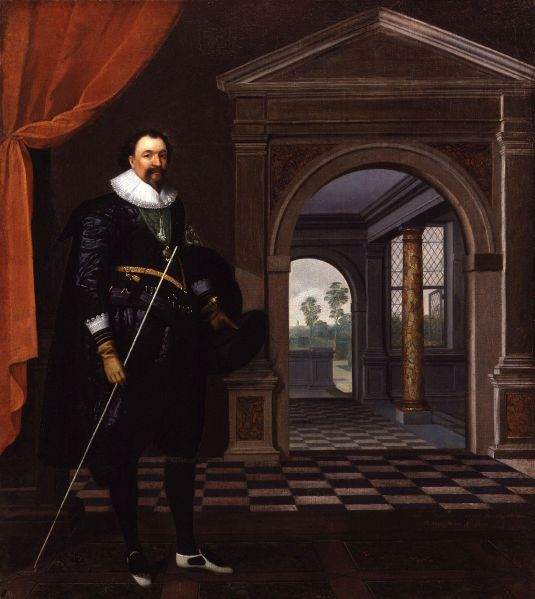
William Herbert, by Daniel Mytens (undated)
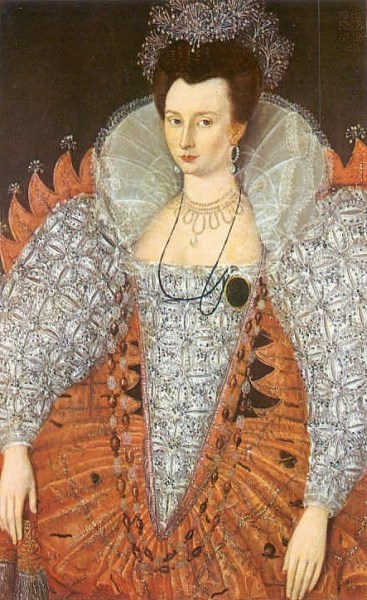
Mary Fitton, circa 1595
1601 John Shakespeare dies.
— Henry Wriothesley, Earl of Southampton, and Shakespeare’s early patron, is committed to the Tower of London for his part in Essex’s Rebellion.
— William Herbert, Earl of Pembroke, jeopardizes his position at Elizabeth’s court by his affair with Mary Fitton and is briefly imprisoned.
— Shakespeare’s Hamlet is performed for the first time.

Ophelia, by John Everett Millais, 1851
1603 Elizabeth I dies, and James VI of Scotland becomes James I, King of England. The new king sets the Earl of Southampton free and enables him to resume his place at court; he also installs William Herbert as a Knight of the Garter. The accession of the new king also stimulates a second wave of sonneteering among English poets.
— Shakespeare’s company, the Lord Chamberlain’s Men, is awarded a royal patent, and changes its name to the King’s Men.
— Another epidemic of plague breaks out, lasting almost until 1610; consequent loss of income from the theatre causes Shakespeare to focus again on non-dramatic poetry.
1605 The Gunpowder plot fails: Guy Fawkes is executed one year later.
1607 Shakespeare’s Othello is performed for the first time.
1608 The King’s Men take over the Blackfriars theatre and use it as their winter location.
— Mary Shakespeare dies.


First Quarto of Shakespeare’s Sonnets, title page and dedication, 1609
1609 The First Quarto of Shakespeare’s Sonnets is published by Thomas Thorpe, along with his third narrative poem, A Lover’s Complaint.
1612 The First authorized version of the Bible in English (King James’s Bible) is published.
1613 The Globe Theatre burns to the ground during a performance of Henry VIII.
— Shakespeare retires to Stratford-upon-Avon.
1616 Shakespeare dies and is buried in the chancel of the Holy Trinity Church.
1623 The same year, the First Folio edition of ‘Mr. William Shakespeares Comedies, Histories, & Tragedies’ is published.
— Anne Hathaway dies.

John Benson’s pirated edition of Shakespeare’s poems, 1640
1640 John Benson publishes an anthology of poems entitled Poems: Written by Wil. Shakespeare Gent, some by Shakespeare, including 146 of the original sonnets, but about 30 which are not (including poems by John Milton and Ben Jonson). Those that are by Shakespeare are rewritten and rearranged to make them appear to be addressing a woman.
1769 Organized in Stratford-upon-Avon by the actor and theatre manager David Garrick to celebrate the 200th anniversary of the birth of Shakespeare, the Stratford Jubilee has a major impact on the rising tide of “bardolatry,” i.e., Shakespeare’s anointment as the English national poet.
1780 Edmond Malone publishes the first critical edition of Shakespeare’s sonnets as a supplement to Samuel Johnson and George Stevens’s 1778 edition of Shakespeare’s plays. Malone is the first scholar to identify a structure in the 154 sonnets, dividing them between the first 126 dedicated to the “Fair Youth” and the 26 to the “Dark Lady”.
1879 The Royal Shakespeare Company is founded in Stratford-upon-Avon.
1889 Oscar Wilde publishes “The Portrait of Mr W. H.,” a fictional essay speculating on the identity of the dedicatee of Shakespeare’s collection of sonnets.
1910 George Bernard Shaw releases the short metafictional comedy “The Dark Lady of the Sonnets”.
1996 A replica of the Globe theatre is completed in London.
 The CONDORCET