
February 2012: Xi Jinping visits the U.S.: Following U.S. Vice-President Joe Biden’s visit to China the year before, Chinese Vice-President Xi Jinping is invited by President Barack Obama to the White House, just several months before his expected appointment as leader of the People’s Republic of China. Xi Jinping takes this opportunity to stop in Iowa, where he meets with his host family from his 1985 trip there.
March 2012: Rising Trade Tensions: The U.S., the E.U. and Japan file a request for consultations with China at the WTO over its restrictions on exporting rare earth metals, which force multinational firms that use the metals to relocate to China: the Chinese authorities call the move “rash and unfair” and vow to defend their rights in trade disputes. Meanwhile, the U.S. Congress passes a law applying tariffs on Chinese products subsidised by Beijing, including paper, steel, tyres, magnets and chemicals.
April 2012: Cheng Guangcheng’s escape: On April 22, the blind Chinese human rights activist Chen Guangcheng escapes house arrest in Shandong province and flees to the U.S. embassy in Beijing. Both sides eventually avert a crisis by allowing Chen to move to the U.S. as a student.
August 2012: ‘Death by China’: On August 17, a documentary film adaptation of Peter Navarro’s best-selling book “Death by China,” published the year before, is released, narrated by actor Martin Sheen. The film denounces the PRC’s predatory economic, commercial and financial tactics, and warns the audience about its hegemonic ambitions.
November 2012: Obama Re-elected: On November 6, the incumbent Democratic President Barack Obama and his running mate, Vice President Joe Biden, defeat the Republican ticket of former Governor Mitt Romney of Massachusetts and Representative Paul Ryan of Wisconsin, winning 332 electoral votes and 51.1% of the popular vote. Surveys show that 81% of Chinese American voters voted for Mr Obama. On the same day, Donald Trump tweets that “the concept of global warming has been created by and for the Chinese in order to make US manufacturing non-competitive.”
November 2012: China’s New Leadership: On November 15, China’s 18th National Party Congress elects Vice-President Xi Jinping as General Secretary of the Chinese Communist Party and commander-in-chief of the army. Li Keqiang is appointed premier alongside him. The country’s new de facto leader delivers a series of speeches on the “rejuvenation” of China, setting out two “centennial goals”: to make China a “moderately prosperous society” by 2021, and then a “modernized, fully developed, rich and powerful” nation by 2049.
March 2013: Xi Jinping becomes president: On March 14, with just one dissenter among 3,000 delegates, China’s National People’s Congress vests Xi Jinping with the formal title of state president. On March 22, President Xi Ping goes to Moscow for his first official visit as president.
May 2013: Chinese espionage: On May 22, a commission led by Dennis Blair, a former director of national intelligence, and John Huntsman, a former ambassador to China, issues a report accusing China of being responsible for the theft of 50 to 80% of all American intellectual property that is stolen. In February, Mandiant, a cyber-security firm, had identified Unit 61398 of the People’s Liberation Army as the source of cyber-attacks against 140, mainly American, companies since 2006.

Chinese President Xi Jinping and US President Barack Obama in Sunnylands, California in June 2013
June 2013: The Sunnylands Summit: On June 7 and 8, Barack Obama hosts Xi Jinping for a “shirt-sleeves summit” in California in a bid to ease tense U.S.-China relations. The presidents pledge to cooperate more effectively on bilateral, regional, and global issues, including climate change and North Korea. Xi Jinping insists that “the vast Pacific has enough space for two large countries like the United States and China.”
September 2013: China’s New Silk Road: During a trip in Kazakhstan, Xi Jinping announces the creation of the “One Belt, One Road” initiative (OBOR) – also known as the “Belt and Road Initiative” – a $1.4 trillion investment plan in infrastructure to link 65 countries in Asia, Europe and North Africa, with a combined population of 4.4 billion people. The project is to be funded by an Asian Infrastructure Investment Bank (AIIB), which is officially launched in January 2016.
November 2013: China’s ADIZ in the East China Sea: On November 23, the Chinese army unilaterally announces the creation of an Air Defence Identification Zone in the East China Sea, compelling any aircraft flying through it to notify Chinese authorities in advance and follow instructions from Chinese air-traffic controllers. On November 26, the US sends two B-52 bombers to fly through the new zone without notifying China.
December 2013: China’s first moon landing: On December 14, the Chinese Chang’e spacecraft lands on the moon – the first time any spacecraft has done so since 1976.
December 2013: The USS Cowpens incident: on December 5, while on a mission in the South China Sea to observeChina’s first aircraft carrier, the Liaoning, on its maiden deployment, the American guided-missile cruiser USS Cowpens is forced to leave the area. The U.S. lodges protests with China about the near miss.
February 2014: Accusations of human rights violations: On February 27, the United States releases its China report on human rights practices for 2013, which describes the PRC as an authoritarian state and a place in which repression and coercion are routine. The day after, China publishes its own report on human rights violations in the U.S., which cites surveillance on its own citizens, mistreatment of inmates, gun violence, homelessness and other social ills.
March 2014: Attacks in Kunming: On March 1, a group of knife-wielding assailants, apparently Muslims from western China, cause mayhem and murder in the south-western Chinese city of Kunming, stabbing 29 people to death at the railway station and injuring 140 others.
March 2014: Chinese cybercrime: On March 19, the US Justice Department unveils charges of cybercrime against five members of China’s People’s Liberation Army: the five hackers are accused of stealing trade technology from U.S. companies, hacking the Office of Personnel Management and stealing data from 22 million current and former federal employees. This is the first time the U.S. government has charged employees of a foreign government with cybercrime. In response, Beijing suspends its cooperation in the U.S.-China cyber-security working group.
April 2014: Controversial U.S. official visit to Taiwan: On April 15, Gina McCarthy, head of the Environmental Protection Agency, travels to Taiwan and meets the island’s president Ma Ying-jeou, the first time an American cabinet official has visited the island in 14 years. The visit is denounced by the Chinese foreign ministry as a violation of the U.S.’s promises not to recognize Taiwan as an independent state.
April 2014: Bombing in Urumqi: On April 30, a bombing in a market in the capital of Xinjiang leaves 40 people dead. The Chinese authorities ramp up a security policy in the province aimed at fighting the “three evils” of terrorism, separatism and religious extremism.
July 2014: Propaganda on Tibet: On July 17, hundreds of fake Twitter accounts are revealed to have been operated to promote Beijing’s policies in Tibet, attacking the Dalai Lama and political figures or celebrities supporting him.
August 2014: Close encounter in the South China Sea: On August 23, the Pentagon protests to the Chinese military after a Chinese fighter-jet passed within 20 feet of an American surveillance plane, just avoiding a mid-air collision over international waters east of China’s Hainan Island.
September 2014: U.S. protests over the Uighur situation: On September 24, U.S. Secretary of State John Kerry condemns China’s sentencing of Uighur academic Ilham Thoti for life, after he was accused of promoting separatism in the classes he taught at the university in Beijing. The White House also stresses “the importance of Chinese authorities differentiating between peaceful dissent and violent extremism.” The Chinese authorities respond by warning foreign countries against “interference in China’s judicial sovereignty and independence”.

Umbrella demonstrators in Hong Kong
September 2014: The Umbrella movement begins in Hong Kong: on September 28, a non-violent political movement begins in Hong Kong to protest against the decision of the PRC to pre-screen candidates for the 2017 election of Hong Kong’s chief executive. The name of the movement arises from the use of umbrellas as a tool of passive resistance to the Hong Kong Police’s use of pepper spray to disperse the crowds of demonstrators.
October 2014: China becomes the world’s largest economy: For the first time, the IMF’s annual report on the global economy puts the U.S. in 2nd place after China in terms of GDP in purchasing power parity. In late 2015, China’s manufacturing output represents 150% of the US.
November 2014: The APEC summit in Beijing: On November 11, Xi Jinping hosts a state visit in Beijing for Barack Obama. The talks revolve around trade, visas, security, and climate change: Xi Jinping promises to eliminate tariffs on IT products and the two presidents broker a deal on carbon emissions, which they hope will encourage progress at UN climate talks in Paris in December 2015.
May 2015: The PRC launches its “Made in China” strategic plan: On May 19, Chinese premier Li Keqiang and his cabinet launch a national strategic plan to further develop the country’s manufacturing sector, aiming to have upgraded it from the production of cheap low-tech goods to high-tech products and services, and to have achieved independence from foreign suppliers by the end of the PRC’s 13th and 14th Five-Year Plans.
May 2015: Rising tensions in the South China Sea: On May 30, at the 14th annual Shangri-La Dialogue on Asian security, U.S. Secretary of Defence Ashton Carter calls on China to halt its land reclamation efforts in the South China Sea, saying that the US opposes “any further militarization” of the disputed territory. Ahead of the conference, U.S. officials say that images from U.S. naval surveillance provide evidence that China is placing military equipment on a chain of artificial islands, despite Beijing’s claims that construction is mainly for civilian purposes.
September 2015: Xi Jinping’s state visit in Washington, DC: On September 22, Barack Obama hosts a state visit at the White House for Xi Jinping. The two presidents discuss Chinese cyber-espionage, currency manipulation, and China’s island-building in the South China Sea.
February 2016: The signing of the T.P.P.: on February 3, in Auckland, New Zealand, President Obama formally signs the Trans-Pacific Partnership (TPP), along with the leaders of 11 eleven other countries. The agreement, however, must be ratified by the US Congress.
August 2016: The launching of Micius: On August 16, China launches Micius, the world’s first quantum communication satellite. On month before, the country inaugurated the world’s largest telescope in Guizhou, southwest China.
June 2016: Donald Trump unveils his China policy: At a campaign event in Pennsylvania on June 28, Donald Trump lays out his plans to counter unfair trade practices from China. During the campaign, the Republican presidential candidate repeatedly accuses China of “raping” the U.S.
July 2016: The China solution: On July 1, in a speech on the 95th anniversary of the founding of the Chinese Communist Party, Xi Jinping asserts that the Chinese people are “fully confident that they can provide a China solution to humanity’s search for better social institutions”.

Donald Trump on the campaign trail in 2016
November 2016: Donald J. Trump becomes the 45th U.S. President: On November 8, Donald Trump defeats former Secretary of State Hillary Clinton, receiving 304 electoral votes but only 46.1% of the popular vote. Surveys show that only 24% of Chinese-Americans voted for Trump (against 71% for Clinton).
December 2016: The Taiwanese phone call: On December 2, president-elect Donald Trump reveals that he called Tsai Ing-wen, the chief executive of Taiwan, on the phone and suggests that he might reconsider the “one China’ principle” unless the PRC is willing to make a commercial deal with the US. This sparks off outrage and threats from Beijing.
January 2017: Thucydides’ trap: On January 18, in a speech at the UN in Geneva, Xi Jinping talks about a “hegemon imposing its will on others” and warns America about a “Thucydides trap”—the disaster that befell ancient Greece when the incumbent power, Sparta, failed to accommodate the rising one, Athens. The day before, in a speech at the World Economic Forum in Davos, Switzerland, Xi Jinping announced that China should “guide economic globalisation”.
January 2017: The U.S.’s withdrawal from the T.P.P.: On January 23, three days after his inauguration, President Trump signs an executive order confirming that the US is withdrawing from the Trans-Pacific Partnership.
April 2017: The Mar-a-Lago summit: On April 7, President Trump welcomes Xi Jinping for a two-day summit at his Mar-a-Lago golfing estate in Florida, where bilateral trade and North Korea top the agenda. Afterward, Donald Trump touts the “great chemistry” between the two leaders and the “tremendous progress” in the U.S.-China relationship, while Xi Jinping cites a deepened understanding and greater trust building. Both presidents agree to a 100-day plan for trade talks.
May 2017: A “new high” between the U.S. and China: On May 12, U.S. Commerce Secretary Wilbur Ross unveils a 10-part agreement between Beijing and Washington to expand trade of products and services like beef, poultry, and electronic payments. Ross describes the bilateral relationship as “hitting a new high”, though the countries do not address more contentious issues including aluminium, car parts, and steel.
June 2017: The U.S. withdraws from the Paris climate change agreement: On June 1, President Trump confirms that the US is withdrawing from the 2015 agreement on climate change.
July 2017: North Korea’s first intercontinental missile test: On July 4, Pyongyang announces that it successfully tested an intercontinental ballistic missile able to reach Alaska. On August 8, President Trump pledges to unleash “fire and fury like the world has never seen” against North Korea if it further threatens the U.S. and its interests. The Chinese authorities react through Xinhua, Beijing’s official state news agency, by warning all parties involved not “to play with fire”.
August 2017: China opens military base in Djibouti: On August 1, China opens its first foreign military base in Djibouti. The base is staffed with 2,000 personnel and its pier is designed to fit the People’s Liberation Army’s warships and nuclear-powered submarines.
November 2017: Donald Trump’s state visit to China: On November 9, Xi Jinping welcomes Donald Trump on a state visit in Beijing and takes him through a private tour of the Forbidden City. During the visit, the U.S. President lavishes praise on China’s leader and blames his own predecessors for the “huge” trade deficit between the two countries.
December 2017: The U.S.’s 2017 National Security Strategy: Delivered by President Trump on December 18, the US’s new 2017 National Security Strategy names the PRC a “revisionist” power, and charges that it “seeks to displace the United States in the Indo-Pacific region, expand the reaches of its state-driven economic model and reorder the region in its favour”.
March 2018: The U.S. announces a series of tariffs: On March 8, the Trump administration announces 25% tariffs on steel and 10% on aluminium from all suppliers, just two weeks announcing steep tariffs on all washing machines and solar panels.
March 2018: Xi Jinping tightens his grip on power: On March 11, the PRC adopts an amendment to the Chinese constitution that consolidates the Communist Party’s control and removes term limits to the presidency, allowing Xi Jinping to rule indefinitely.

The Liaoning, China’s first aircraft-carrier
March 2018: The US passes the Taiwan Travel Act: On March 16, the US passes a law to “encourage visits between officials from the United States and Taiwan at all levels”. In response, a spokesman from China’s foreign ministry “urge[s] the US side to correct its mistake.” On March 20, however, the State Department dispatches Alex Wong, a deputy assistant secretary, to Taipei for a three-day visit, including a dinner with Taiwan’s president. The next day, China’s aircraft-carrier, the Liaoning, is sent on a patrol through the Taiwan Strait.
April 2018: The U.S.-China trade war begins: On April 2, China imposes tariffs on a range of American products including airplanes and soybeans. The next day, the U.S. announces sweeping tariffs on Chinese imports, worth at least $50 billion. The day after, China again responds with plans for retaliatory tariffs on $50 billion of US imports.
April 2018: Donald Trump appoints Mike Pompeo as State Secretary: On April 26, Mike Pompeo – the former CIA director, a self-professed China “hawk” – replaces Rex Tillerson as U.S. Secretary of State.
May 2018: China is excluded from RIMPAC: On May 23, the Pentagon announces that it has disinvited the Chinese navy from RIMPAC (Rim of the Pacific Exercice), the world’s largest multinational war games at sea, following China’s deployment of missiles on artificial islands it has built in the South China Sea. The PRC had previously participated to RIMPAC in 2014 and 2016.
June 2018: Restrictions on Chinese students’ visas in the US: On June 11, the U.S. State Department restricts visas for Chinese graduate students studying in sensitive research fields to one year, with the chance to reapply every year.
June 2018: The Singapore summit: On June 12, a summit meeting is held in Singapore between Donald Trump and North Korean supreme leader Kim Jong-un – the first-ever meeting between leaders of the U.S. and North Korea. Encouraged by China, the two leaders sign a joint statement agreeing to security guarantees for North Korea, new peaceful relations, the denuclearization of the Korean peninsula, recovery of soldiers’ remains, and follow-up negotiations between senior officials. The next day, President Trump tweets that there is “no longer” a nuclear threat posed by North Korea and that Americans can “sleep well tonight”.
July 2018: The U.S.-China trade war escalates: On July 6, the Trump administration imposes fresh tariffs totalling $34 billion worth of Chinese goods, notably televisions and medical devices. . Beijing criticizes the Trump administration’s moves as “trade bullying” and retaliates with tariffs on $34 billion worth of American commodities such as beef, dairy, seafood, and soybeans.
August 2018: The US announces the creation of a Space Force: On August 8, Mike Pence, the US Vice-president, includes “highly sophisticated” Chinese satellite manoeuvres as one of the reasons to set up a “Space Force”.
August 2018: FIRRMA: President Trump signs into effect the Foreign Investment Risk Review Modernisation Act (FIRRMA), which establishes more vigilant reviews of foreign investments – notably Chinese investments – into American companies on national-security grounds.
September 2018: Trump denounces globalism and China: In his address to the UN General Assembly on September 25, Trump condemns China’s mercantilism and speaks out on globalization: “We reject the ideology of globalism and we embrace the doctrine of patriotism,” he says. The next day, he accuses China of meddling in the coming midterm elections to weaken his position.
October 2018: Mike Pence’s speech at the Hudson Institute: On October 4, Vice-president Mike Pence delivers a speech marking the clearest articulation yet of the Trump administration’s policy toward China and a significant hardening of the U.S.’s position. He announces that the Trump administration will prioritize competition over cooperation by using tariffs to combat “economic aggression.” He also condemns what he calls growing Chinese military aggression, especially in the South China Sea, criticizes increased censorship and religious persecution by the Chinese government, and accuses China of stealing American intellectual property and interfering in U.S. elections.
December 2018: The trade truce: On December 1, during the G20 summit in Buenos Aires, Argentina, Donald Trump and Xi Jinping have, in the American president’s words, “an amazing and productive meeting”, after which China pledges to buy more American goods and address deeper American concerns, while the US promises to delay to March 1, 2019, a rise in tariffs, from 10% to 25% on $200bn of goods, that had been set for January 1.
December 2018: Meng Wanzhou is arrested: On December 5, Meng Wanzhou, the chief financial officer of Chinese telecom and electronics company Huawei, is arrested in Canada at the U.S.’s request. The Justice Department alleges Huawei and Meng violated trade sanctions against Iran and committed fraud, and requests her extradition. Calling Meng’s arrest a “serious political incident”, Chinese officials demand her immediate release.
February 2019: The Hanoi Summit: On February 28, a summit meeting in Hanoi, Vietnam, between Donald Trump and Kim Jong-un ends without a deal.
May 2019: The trade war worsens: On May 10, the Trump administration raises tariffs from 10 to 25% on $200 billion worth of Chinese goods. China retaliates by announcing plans to increase tariffs on $60 billion worth of American goods. Days later, the Trump administration bans U.S. companies from using foreign-made telecommunications equipment that could threaten national security, notably Huawei.
June 2019: The Anti-Extradition Law Amendment Bill Movement: On June 12, pro-democracy protests erupt in Hong Kong after the government’s introduction of the Fugitive Offenders amendment bill, which would facilitate transfers of prisoners and fugitives from the island to mainland China. The crackdown of the police is severe and this opens a period of a year of unrest on the island. As early as June 13, US Senator Marco Rubio of Florida (R) introduces the Hong Kong Human Rights and Democracy Act, which requires the U.S. government to impose sanctions against officials responsible for human rights abuses in Hong Kong and to conduct an annual review to determine whether changes in the island’s political status justify changing the U.S.’s favourable trade relations with it; the bill is eventually signed into law by President Trump on November 27, 2019.
August 2019: The trade war worsens: On August 1st, the White House threatens to impose a further round of duties on $300bn of Chinese exports by the start of September. On August 5, China responds by telling its state-run companies to stop buying American agricultural goods. On the same day, China’s central back allows the yuan to fall to a rate of seven against the dollar; in response, the Trump administration designates China a currency manipulator, the first time the U.S. has officially done so since 1994.
August 2019: Propaganda on Hong Kong: On August 18, Twitter and Facebook announce that they have suppressed thousands of Chinese accounts identified as part of a state-sponsored effort to discredit the protests in Hong Kong.
August 2019: U.S. arms sales to Taiwan: On August 16, the White House confirms the sale to Taiwan of 66 new F-16 fighter jets, worth $8 billion. A spokeswoman for the Chinese foreign ministry condemns American arms sales to Taiwan, which “severely violate the one-China principle”.
October 2019: Trump urges China to investigate the Bidens: On October 3, President Trump, already facing impeachment for pressuring Ukraine to investigate his political rivals, publicly calls on China to examine former Vice President Joe Biden and his family, an extraordinary request for help from a foreign power for the 2020 election: “China should start an investigation into the Bidens, because what happened in China is just about as bad as what happened with Ukraine,” Mr Trump tells reporters.
October 2019: The Houston Rockets controversy: On October 5, Daryl Morey, the general manager of the Houston Rockets, an NBA team, ignites a furore in China by tweeting support for protesters in Hong Kong. Threats and boycotts force him and NBA officials to apologize.
October 2019: U.S. retaliatory measures over Xinjiang: On October 7, the U.S. Commerce Department bans American firms from selling software and hardware to 20 Chinese public-security organs involved in the PRC’s human rights abuses against Uighur Muslims in Xinjiang, and blacklists 8 Chinese companies whose products facilitate the surveillance in the western province.
December 2019: Chinese espionage: On December 10, the U.S. authorities arrest a Chinese cancer researcher at Logan Airport in Boston after he tried to smuggle to China vials of biological material taken from a Harvard teaching hospital.
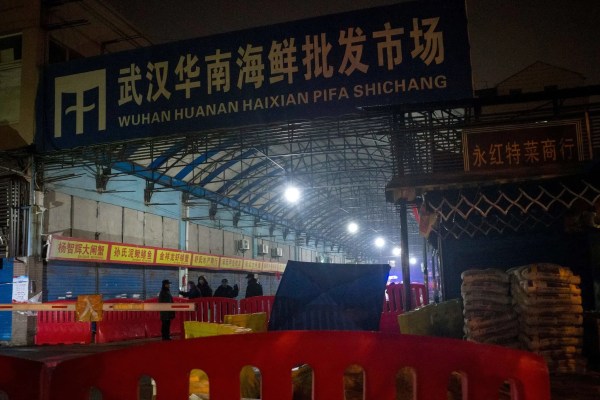
Wuhan’s wet market, where the coronavirus outbreak started.
December 2019: The COVID-19 pandemic begins: On December 31, China officially alerts the World Health Organization about a cluster of pneumonia cases in Wuhan, Hubei province, with an unknown cause. Taiwanese researchers immediately suspect the possibility of an unknown epidemic but their warnings are ignored by the WHO, which does not recognize the island as a member. Taiwan nevertheless initiates emergency measures on its soil, well before any other country.
January 2020: Taiwan’s Tsai Ing-wen is re-elected: On January 11, Taiwan’s incumbent president, Tsai Ing-wen, is re-elected for four more years with a historic turnout. The victory of this China-sceptic is perceived a slap in the face for PRC leaders.
January 2020: Phase One Trade Deal Signed: On January 15, President Trump and Chinese Vice Premier Liu He sign a deal that relaxes U.S. tariffs on Chinese imports and commits China to buying an additional $200 billion worth of American goods over two years. China also pledges to enforce intellectual property protections. President Trump calls the agreement “an unbelievable deal for the United States”, though it does not yet address the Chinese government’s extensive subsidies. Days before the signing, the U.S. dropped its designation of China as a currency manipulator.
January 2020: U.S. Peace Corps leaves China: On January 16, the US Peace Corps – a government agency created in 1961 to send college graduates to work as volunteers in developing countries – announces that it is going to suspend its operations in China, after sending more than 1,300 volunteers there since 1993.
January 2020: The arrest of Charles Lieber: On January 28, 2020, Charles Lieber, a pioneer of nanoscience and chairman of Harvard University’s chemistry department, is arrested by the FBI on a charge of concealing his involvement with China’s Thousand Talents programme and the Wuhan University of Technology. The same day, the FBI issues arrests against two other Chinese researchers suspected of spying for China.
January 2020: The first impeachment trial of Donald Trump: On January 16, the first impeachment trial of President Trump begins in the U.S. Senate; he is acquitted on February 5.
January 2020: Tensions soar as coronavirus pandemic spreads to the U.S.: On January 21, the first case of COVID-19 in the US is confirmed. Leading officials in both China and the United States blame the other side for the pandemic. President Trump makes repeated references to the “Chinese virus,” which he says spread because of failures by the Chinese government, while Chinese officials spread the rumour that the U.S. military brought the virus to China as a bioweapon.
March 2020: China and the U.S. expel journalists: On March 2, in response to the Chinese government’s expulsion of 3 journalists for The Wall Street Journal, the U.S. State Department announces that it will limit the number of journalists from 5 Chinese state-run media outlets in the U.S. to 100, down from 160. The Chinese government responds by expelling ten more journalists from The New York Times, The Wall Street Journal and The Washington Post, and demands that American media outlets in China share information with the authorities about their operations there.
March 2020: The sale of Grindr: On March 7, the Chinese Internet firm Beijing Kunlun is forced to sell Grindr, a gay dating app with 3.3m daily users, by the Committee on Foreign Investment in the United States, a government agency that screens foreign deals for security concerns. The agency considers that a gay app could be a blackmailer’s trove, notably for the Chinese intelligence services.
May 2020: China offers it support to the W.H.O.: On May 18, Xi Jiping announces at the annual WHO assembly that Beijing will donate $2 billion toward fighting the coronavirus and dispatch doctors and medical supplies to Africa and other countries in the developing world.
May 2020: Black Lives Matter: On May 25, Minneapolis police officer Derek Chauvin chokes George Floyd to death by kneeling on his neck, as three other officers watch. Video of the incident goes viral and protest break out across hundreds of cities in the U.S. and around the world. Chinese officials and social media emphasize the crisis as evidence of American injustice and hypocrisy.
May 2020: The U.S. offers its support to Tibet: On May 17, Mike Pompeo officially marks the 25th anniversary of the disappearance of Gedhun Choekyi Nyima, the second-highest figure in Tibetan Buddhism, who did not appear in public since the PRC government abducted him in 1995, at age six. The Secretary of State reiterates the U.S.’s support to religious and freedom worldwide and its condemnation of the PRC’s campaign to eliminate the religious, linguistic, and cultural identity of Tibetans.
May 2020: The PRC imposes security measures in Hong Kong: On May 28, China’s National People’s Congress overwhelmingly approves imposing national security legislation on Hong Kong to tackle secession, subversion, terrorism and foreign interference. President Trump orders his administration to begin the process of eliminating special U.S. treatment for Hong Kong.
May 2020: Donald Trump’s Rose Garden speech: On May 29, 2020, in a speech outside the White House, President Trump accuses the Chinese government of a comprehensive “pattern of misconduct” and blames his predecessors for letting it get away with it. He accuses the P.R.C. of covering up the coronavirus outbreak and being responsible for the deaths of “more than 100,000 American lives”, and attacks the World Health Organization as effectively controlled by Beijing, announcing that the US would withdraw from the organization. The US president also directs Treasury Secretary Steven Mnuchin to evaluate Chinese corporations listed on US financial markets as potential targets of future restrictions and issued a proclamation to protect sensitive American university research from Chinese spying and to bar an unspecified number of Chinese nationals from entering the US for graduate study. Moments after the speech, he then tweets simply: “CHINA!”
June 2020: Chinese hackers target Joe Biden: On June 4, Google reveals that Chinese hackers have been targeting the email accounts of Joe Biden’s campaign staff, while Iranian ones have been targeting Donald Trump’s.
June 2020: American lawmakers attempt to block Chinese students: On June 9, Republican Congressmen introduce the Secure Campus Act, aiming to bar Chinese citizens from getting visas for graduate or postgraduate study in STEM fields, but the bill does not receive a vote.
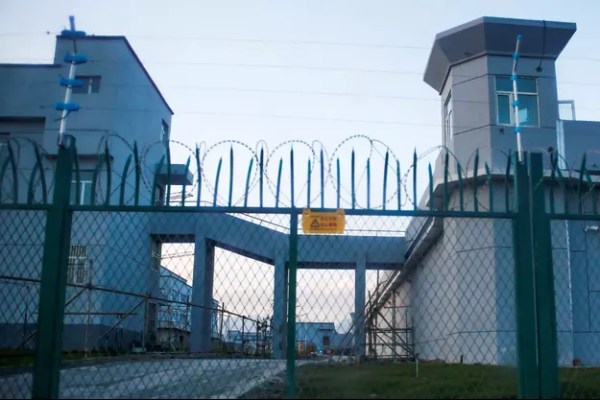
A detention center in the Dabancheng district of Xinjiang, designed to ‘reeducate’ the local Uyghur population
June 2020: U.S. sanctions over Xinjiang: On 17 June, President Trump signs the Uyghur Human Rights Policy Act which authorizes sanctions against Chinese officials responsible for detention camps. On July 9, the first sanctions are inflicted upon senior Chinese officials, including a member of the Communist party’s Politburo (Chen Quaguo, the party chief in Xinjiang since August 2016) for their part in the persecution of the Uighurs in Xinjiang. On July 20, 11 Chinese companies are also added to the Commerce Department’s blacklist for human rights violations in the Xinjiang region, including forced labour. The list of sanctioned companies includes current and former suppliers to major international brands such as Apple, Nike, Ralph Lauren, Google and HP. Later in the month, the U.S. also imposes sanctions on the Xinjiang Production and Construction Corps, known locally as the Bingtuan, a major economic and paramilitary organization with vast interests in Xinjiang, accusing it of facilitating widespread abuses against Uighur Muslims.
June 2020: John Bolton reveals secrets behind the White House’s China policy: On June 23, John Bolton, President Trump’s national security adviser between April 2018 and September 2019, publishes a tell-all memoir entitled The Room Where It Happened about his experience at the White House. The book reveals that Donald Trump asked Xi Jinping to help him win the 2020 US election, and describes him as unconcerned about human rights violations in China. More generally, the book offers a concerning picture of the Trump administration’s erratic foreign policy, notably on China.
July 2020: The F.B.I. designates China as a threat to the U.S.: On July 7, in a speech at the Hudson Institute, F.B.I. Director Christopher Wray designates China as the “greatest long-term threat” to the United States: “The FBI is now opening a new China-related counterintelligence case every 10 hours,” he says. “Of the nearly 5,000 active counterintelligence cases currently under way across the country, almost half are related to China.” Two days later, in a speech in Beijing, Wang Yi, the foreign minister of China, says that the China-U.S. relationship is facing its “most severe challenge” since the normalization of diplomatic ties in 1979.
July 2020: Hong Kong’s preferential status with the U.S. is revoked: On July 15, President Trump signs an executive order ending Hong Kong’s preferential trade status with the U.S. and initiates sanctions against officials and businesses that undermine Hong Kong’s freedoms and autonomy. Chinese officials denounce what they call U.S. interference in China’s internal affairs and threaten to impose retaliatory sanctions.
July 2020: William Barr accuses Hollywood of “kowtowing” to the PRC: On July 16, U.S. Attorney General William Barr accuses the American film and entertainment industry of “kowtowing” to the Chinese Communist party. He criticizes Disney for allowing Chinese officials to have a role in running the theme park it created in Shanghai, and criticizes Hollywood studios for bowing to Chinese pressure to tweak scripts in return for Chinese distribution.
July 2020: Diplomatic Escalation: On July 23, the US orders China to close its consulate in Houston, Texas – a first since the normalisation of relations in 1979 – alleging that it is a hub of espionage and intellectual property theft. China retaliates by closing the U.S. consulate in Chengdu.
July 2020: Pompeo calls for the end of “blind engagement” with China: On July 23, U.S. Secretary of State Mike Pompeo delivers a speech at the Richard Nixon Presidential Library in California, titled “Communist China and the Free World’s Future,” and in which he denounces Xi Jinping as “a true believer in a bankrupt totalitarian ideology” and calls on Chinese citizens and democracies worldwide to press Beijing to change its behaviour, warning that “the old paradigm of blind engagement with China simply won’t get it done. If we bend the knee now, our children’s children may be at the mercy of the Chinese Communist Party.”
August 2020: The U.S. threatens TikTok and WeChat: On August 2, Secretary of State Mike Pompeo suggests that the U.S. may take action against TikTok, WeChat and “countless more” Chinese apps “feeding data directly to their national security apparatus”. Four days later, President Trump hints that he intends to shut down WeChat in the US.
August 2020: The U.S. sanctions Chinese officials over Hong Kong: On August 7, the U.S. Treasury imposes sanctions on 11 Hong Kong and Chinese officials over their role in curtailing political freedoms in Hong Kong. China retaliates by sanctioning 6 Republican lawmakers and 5 individuals at non-profit and rights groups.
August 2020: First American official visit in Taiwan since 1979: On August 10, Alex Azar, the health secretary, became the highest-ranking American to visit Taiwan since America severed official ties with it in 1979.
August 2020: The U.S. blocks Huawei’s access to American microchips: On August 17, the Trump administration announced new rules that prohibit anyone from selling microchips to Huawei if these were produced with American technology.
September 2020: China’s fleet becomes the largest in the world: On September 1, a report by the Pentagon on the People’s Liberation Army announces that Beijing now has the world’s largest naval fleet with 350 ships and submarines. Later that month, the US secretary of defence, Mark Esper, announces an ambitious plan to expand the US Navy to confront the growing maritime challenge from China, which Esper says has become the top US security threat, while the Indo-Pacific region is the “priority theatre” for the US military.
October 2020: Arms sales to Taiwan: On October 26, the U.S. approves arms sales of $2.4 billion to Taiwan. The next day, China announces its intentions to impose sanctions on US businesses, including Boeing and Lockheed Martin, and U.S. officials who played a role in the weapons sales.
November 2020: The U.S. blacklists companies linked to the Chinese military: On November 12, President Trump issues an executive order barring Americans from investing in 31 companies with ties to the Chinese military.
November 2020: China signs the R.C.E.P.: On November 15, China and 14 other nations (the 10 countries of the Association of Southeast Asian Nations plus Australia, Japan, New Zealand and South Korea) formally sign the Regional Comprehensive Economic Partnership, one of the world’s largest regional free trade agreements, a pact that was shaped by Beijing partly as a counterweight to American influence in the region and which also leaves out India.
November 2020: Tibetan political leader is invited to visit the White House: On November 21, Lobsang Sangay becomes the first head of the Tibetan government-in-exile to visit the White House in 60 years. The Chinese authorities, who consider Mr. Sangay to be a separatist, denounce the visit as a provocation.
January 2021: Pompeo calls China’s repression of Uyghurs an act of genocide: On January 20, in one of his last acts as secretary of state, Mike Pompeo calls China’s repression of Uyghurs in Xinjiang an act of “genocide”. The next day, the very day of President Biden’s inauguration, Beijing retaliates by imposing sanctions on Mr Pompeo, Peter Navarro, John Bolton, and 25 other Trump administration officials, for their “crazy moves” against China; they will not be allowed to visit either mainland China or Hong Kong, and face restrictions on doing business there.
February 2021: Biden and Xi have their first phone conversation: On February 10, President Biden calls Xi Jinping to greet the Chinese leader on the occasion of the Chinese New Year and affirm the US’s tough line on China’s human rights abuses, notably in Xinjiang, the crackdown in Hong Kong, and regional expansionism. The same day, Biden announces a new 15-member Pentagon taskforce on China, and the acting assistant secretary of state for east Asian and Pacific affairs, Sung Kim, meets in person with Taiwan’s de facto ambassador to the US, Hsiao Bi-khim.
March 2021: Tense meeting in Anchorage, Alaska: On March 19, the first meeting between the new U.S. Secretary of State, Anthony Blinken, and his Chinese peer, Yang Jiechi, is particularly acrimonious. Blinken evokes the rising global concern over Beijing’s authoritarianism, human rights record and assertiveness abroad, while Yang urges the US to stop advancing “its own democracy in the rest of the world” and accuses his American counterpart of “condescension”.
April 2021: China is called biggest threat to the U.S.: The U.S. intelligence services’ annual report ranks China’s effort to expand its growing influence as the largest threat to the country, followed by the national security challenges posed by Russia, Iran and North Korea.

China’s Zhurong rover, which landed on Mars in May 2021.
May 2021: China lands a rover on Mars: after seven months of transit through the solar system, the Tianwen-1 mission is completed and successfully lands the Zhurong rover onto the Martian surface, making China the second nation after the U.S. to accomplish this feat.
June 2021: Biden orders an investigation into the origins of the pandemic: President Biden orders an investigation into the origins of the coronavirus by American intelligence agencies. The agencies deliver their report to the president in August: at this stage, they cannot conclude whether the virus emerged naturally or was the result of an accidental leak from a Chinese lab.
July 2021: China celebrates the 100th anniversary of the Communist Party: During his speech on July 1, Xi Jinping warns that anyone who challenges China’s sovereignty will “crack their heads and spill blood on the Great Wall of steel built from the flesh and blood of 1.4 billion Chinese people.”
September 2021: The U.S. sells submarines to Australia: On September 15, President Biden announces a multi-billion-dollar deal to sell Australia nuclear-powered submarines, potentially armed with cruise missiles, as part of a strategic alliance to contain China in the Indo-Pacific.
September 2021: China applies for membership in the TPP: On September 16, China officially applies for membership in the 11-member Trans-Pacific Partnership, the trade deal that the U.S. originally negotiated to counter its economic power in the area.
 The CONDORCET