—
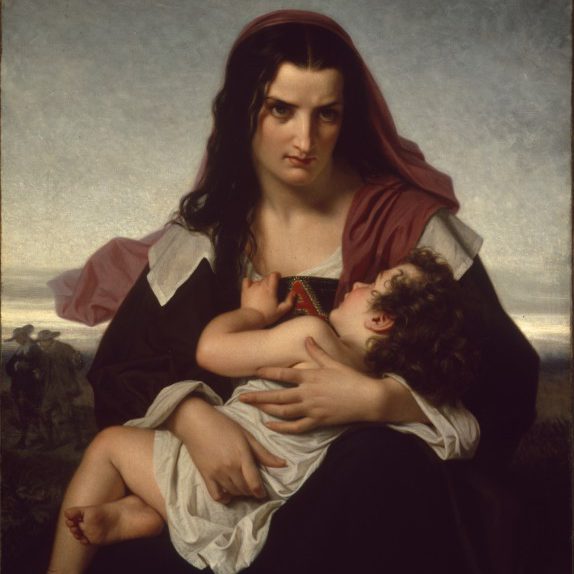
The painting above, originally entitled “Hester et Perle” (1861), is a painting by the French artist Hugues Merle (1823-1881), which Nathaniel Hawthorne is said to have admired greatly. The painting does not depict the cathartic scaffold scene in the “The Market-place,” but an undetermined one early in the novel, when Pearl is still an infant, with the outskirts of Boston’s somewhat barren landscape in the background, while, on the left, two men, including a minister, most likely Dimmesdale and Chillingworth, are pointing toward the sinful mother and her child.
The painting is inspired from the tradition of the Madonna and Child, one of the most influential themes in Christian art, from the dawn of Byzantine iconography to Italian Renaissance art (in paintings, altarpieces, mosaics, sculptures, etc.), the masterpieces of the genre including the works of Duccio, Giotto, Lippi, Leonardo da Vinci, Botticelli, Bellini, Raphael, Michelangelo, Caravaggio and Rubens. (See several renowned examples below) The rising popularity of the theme in the Middle Ages and Early modern history is due to the Marian devotion that grew among Christians after the formal recognition of Mary’s status as mother of Christ by the Council of Ephesus in 431. As the mystery of God’s incarnation became central to Roman Catholic theology and worship, devotion to the Virgin Mary spread across Western culture, and representations of her with the infant Jesus on her lap or enfolding him in her arms became more popular, diverse and creative.
Though the first major Protestant theologians, including Luther and Calvin, venerated Mary too, the Protestant tradition tended to distance itself from the excesses of “Mariolatry,” i.e., her celebration as a quasi Queen of Heaven. This of course makes Hawthorne’s use of the Madonna and Child theme all the more ironical in the novel’s Puritan context.
—
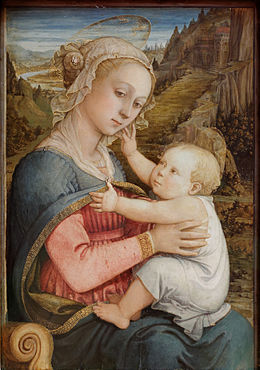
Filippo Lippi (1465)
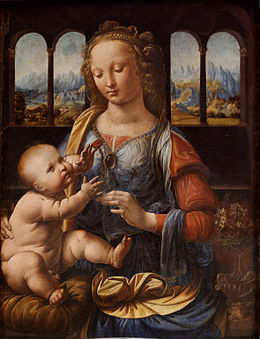
Leonardo da Vinci (1479)

Sandro Botticelli (1480)

Giovanni Bellini (1500)

Raphael (1504)
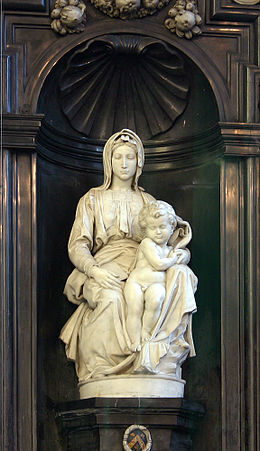
Michelangelo (1504)
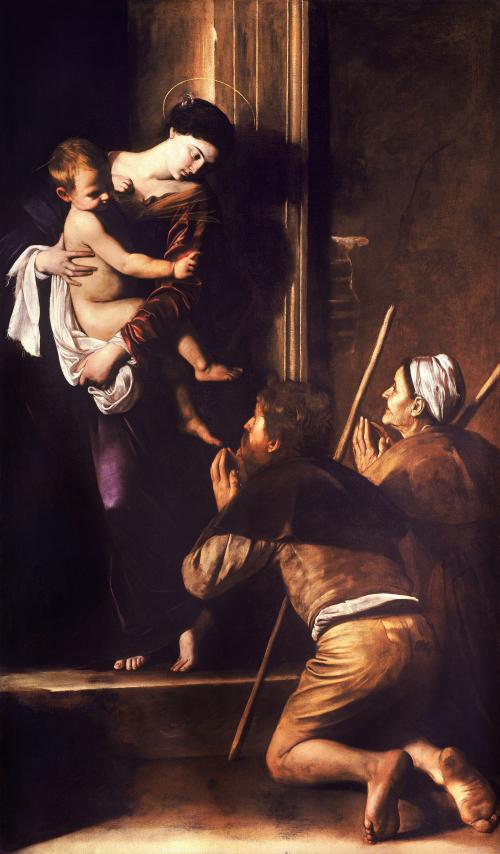
Caravaggio (1603)
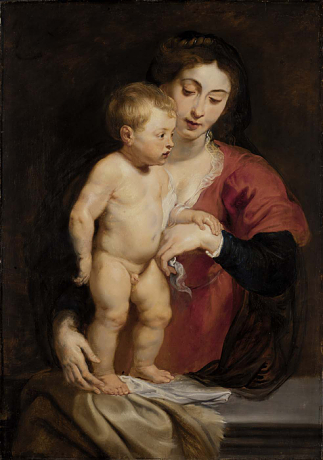
Rubens (1618)
 The CONDORCET