
Portrait by Benjamin Haydon, 1842.
1726: James Thomson starts publishing The Seasons.
1751: Thomas Gray publishes his Elegy Written in a Country Churchyard.
1757: Edmund Burke publishes A Philosophical Enquiry into the Origin of our Ideas of the Sublime & Beautiful.
1770: William Wordsworth is born in Cockermouth, Cumberland.
1771: Dorothy Wordsworth, William’s sister, is born.
1775: The war of independence begins in America.
1776: Thomas Paine publishes Common Sense.
1778: Ann Cookson Wordsworth, William’s mother dies of tuberculosis.
1779: Wordsworth goes to school at Hawkshead Grammar School for the next eight years.
1782: Rousseau publishes Les Rêveries d’un Promeneur Solitaire.
1783: John Wordsworth, William’s father dies.
– William Pitt the Younger becomes Prime Minister.
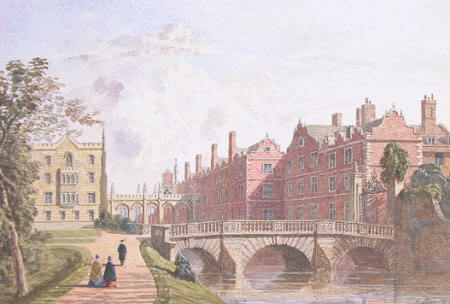
St John’s College, Cambridge, early 19th century.
1787: Wordsworth goes to St John’s College, Cambridge, for the next four years.
– That same year, Wordsworth publishes his first sonnet in ‘The European Magazine’.
1789: William Blake publishes his Songs of Innocence.
1790: Wordsworth goes on a walking tour of Europe, in Germany, France, Switzerland, Italy and around the Alps: the trip gives him his first opportunity to see first-hand the revolution sweeping across France.
1791: In November, Wordsworth goes to France for several months, visits Paris, then stays in Orleans and Blois. While in Orleans, he makes friends with Michel de Beaupuy.
– Thomas Paine publishes The Rights of Man.
– Edmund Burke publishes his Reflections on the Revolution in France.
1792: Wordsworth has an affair with Annette Vallon, who gives birth to their daughter, Caroline, that same year.
– In Paris, Wordsworth makes the acquaintance of John ‘Walking’ Stewart, who published Travels over the most interesting parts of the Globe and The Apocalypse of Nature the year before.
– In April, the philanthropist and MP William Wilberforce introduces a bill in the British Parliament to abolish slavery.
1793: Wordsworth allegedly takes another trip to France and witnesses the execution of the Girondist leader Antoine-Joseph Gorsas in Paris on October 7
– The British Parliament passes the Aliens Act
– William Godwin publishes Enquiry concerning Political
– Wordsworth publishes his first collections of poetry: An Evening Walk and Descriptive Sketches
– Wordsworth writes but does not publish his radical pamphelt A Letter to the Bishop of Llandaff.
1794: The British Parliament suspends Habeas Corpus to fight the threat of sedition around the country.
– The philosopher and scientist Joseph Priestley is forced to leave for the United States after rioters burn his laboratory.
– Robert Southey and Samuel Coleridge co-write the political play The Fall of Robespierre.
– William Blake publishes his Songs of Experience.
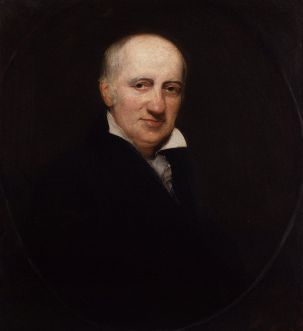
Portrait of William Godwin by Henry William Pickersgill
1795: Wordsworth’s friend Raisley Calvert dies, leaving him a substantial inheritance.
– In February, Wordsworth joins the intellectual circle around William Godwin.
– In December, The British Parliament passes the Treasonable Practices and the Seditious Meetings Acts.
– That same year, Wordsworth makes the acquaintance of Samuel Taylor Coleridge.
– Goethe publishes Wilhelm Meister’s Apprenticeship.

Samuel Taylor Coleridge, portrait by Peter Vandyke, 1795.
1797: Wordsworth completes his play The Borderers, but fails to have it performed on stage.
– William and his sister Dorothy move to Somerset, a few miles away from the Coleridges’ home. Later in the year, rumours that they are republican spies force them to leave.
– That year, the young painter J.M. Turner starts visiting the Lake District for the first time.
1798: Between April and August, Wordsworth and Coleridge work on the poems of the Lyrical Ballads: the collection is published in September, without mentioning the authors’ names.
– Between September and May 1799, Wordsworth, his sister Dorothy and Coleridge travel to Germany. During the trip, Wordsworth starts to work on a long-term philosophical and autobiographical poem, which he ultimately hopes to introduce the trilogy of The Recluse.
– Upon returning to England, the Wordsworths settle at Town End (later called Dove Cottage), Grasmere, in the Lake District. His home gradually becomes a place of literary pilgrimage.
– In Iena, the Schlegel brothers create the journal Athenaeum.
1799: The British Parliament passes the first Combination Act.
1800: The second edition of the Lyrical Ballads is published, this time mentioning Wordsworth’s name, and including a preface by him.
1801: William Pitt the Younger leaves office.
1802: In March, the Peace of Amiens is proclaimed between France and the United Kingdom, allowing Britons to travel again to the continent.
– Wordsworth goes to Calais, meets his daughter Caroline for the first time and offers Annette Vallon a financial settlement.
– Wordsworth marries his childhood friend, Mary Hutchinson.
– A third edition of the Lyrical Ballads is published, with a significantly augmented preface.
1803: In May, Britain breaks the Peace of Amiens and declares war on France.
1804: William Pitt the Younger becomes prime minister again until 1806.
– In December, Napoleon becomes Emperor.
1805: In March, Wordsworth’s brother John dies at sea.
– Wordsworth completes the first full manuscript of The Prelude, but is reluctant to publish it.
1807: Wordsworth and Coleridge drift apart.
– Wordsworth published Poems in Two Volumes, which includes ‘Ode: Intimations of Immortality from Recollections of Early Childhood’.
1812: The Wordsworths lose their 3-year-old daughter Catherine and their 6-year-old son Thomas.
– Lord Byron starts publishing Childe Harold’s Pilgrimage.
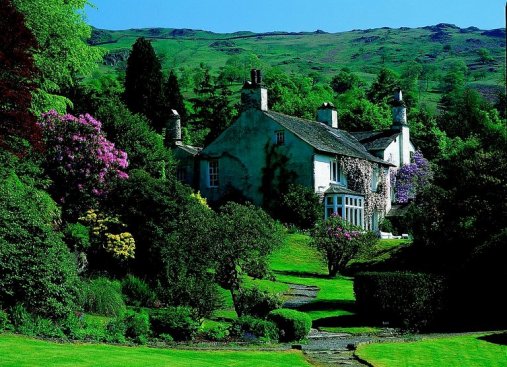
Rydal Mount
1813: The Wordsworths moves to Rydal Mount, Ambleside, where they will spend the rest of their lives.
– That same year, Wordsworth is appointed Distributor of Stamps for Westmoreland.
1814: Wordsworth publishes the poem The Excursion, which should have been the second part of The Recluse. In the Foreword, he alludes to the yet unpublished Prelude, comparing its function to The Recluse to the one that “the Ante-chapel has to the body of a Gothic church”.
1817: Coleridge publishes his Biographia Literaria.
1819: 18 protestors are killed by the cavalry during the Peterloo Massacre.
– Percy Bysshe Shelley publishes The Masque of Anarchy.
– John Keats publishes his La Belle Dame sans Merci and his six major odes.
1823: Wordsworth mends his relations with Coleridge: the two are fully reconciled by 1828.
1828: Wordsworth and Coleridge tour the Rhineland together.
1829: Dorothy Wordsworth suffers from a severe illness that renders her an invalid for the remainder of her life.
1830: George IV dies and is succeeded by William IV
1834: Coleridge dies.
1837: Victoria becomes queen.
1838: Wordsworth receives a doctorate from the university of Durham.
1839: Wordsworth receives a doctorate from the university of Oxford.
1843: Robert Southey dies; Wordsworth succeeds him as Poet Laureate.
1847: Wordsworth’s daughter Dora dies.
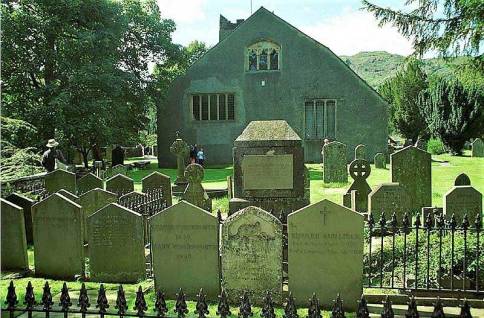
St Oswald’s Church, Grasmere
1850: On 23 April, Wordsworth dies at his home at Rydal Mount from pleurisy, and is buried at St Oswald’s Church, Grasmere.
– Wordsworth’s wife, Mary, publishes the revised 14-book version of The Prelude; or Growth of a Poet’s Mind, an Autobiographical Poem.
1855: Dorothy Wordsworth dies.
1926: The scholar Ernest de Sélincourt publishes the 1stedition of the 1805 manuscript of The Prelude.
 The CONDORCET