Bagehot: Cutting immigration will not placate British voters
The Economist, January 21, 2017
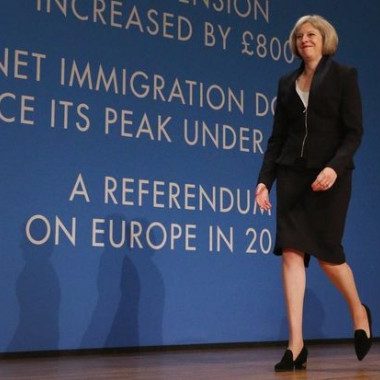
Theresa May’s speech on Brexit lasted almost an hour, but five seconds would have sufficed. She could just have said: “Immigration controls will be imposed at any cost.” As home secretary, she tried and failed to implement David Cameron’s pledge to drive net immigration below 100,000 (it was 335,000 in the year to June 2016). After she replaced him she could easily have dumped the target, but instead cleaved to it. When Amber Rudd, her liberal-minded home secretary, suggested it be softened, Number 10 promptly overruled her. Clearly the prime minister believes it worth pulling Britain out of the European single market and the customs union to achieve this elusive goal. So expect drastic immigration cuts when, in 2019, free movement is replaced by a system of work permits.
The prime minister’s thinking is not hard to fathom. Immigration was integral to the anti-EU campaign in the Brexit referendum. A poll of Leave voters’ motivations commissioned by Lord Ashcroft, a Tory peer, after the vote found that regaining control of borders had been second only to casting off rules from Brussels.
Yet immigration is no monolithic political issue. It contains multitudes. And picking these apart suggests Mrs May should think twice about slamming the door.
That starts with being frank about something politicians use patronisingly tortuous insincerities to describe: some voters just don’t like immigrants. These voters are not bad people – they may be pillars of their communities, compassionate and generous to their fellow citizens – but they dislike hearing foreign languages, mistrust cultures other than the native one and assume foreigners are scoundrels and malingerers. This group is a small minority: in 2015 YouGov, a pollster, found that 10% of respondents would mind if someone of a different ethnicity moved next door; 16% if he or she married one of their children. In general, Britons like immigrants even if they dislike immigration. British Future, a think-tank, found that 84% (and 77% of Leave voters) favoured allowing European residents in Britain to stay after Brexit.
Which is not to say that culture is irrelevant. Listen to voters discuss their worries about immigration and it becomes clear that these are part of a broader sense that society is unstable and unjust; that the system does not work properly. This encompasses concerns about the integrity of borders; crime and terrorism; social atomisation; the speed at which society is changing; the waning of deference. One study last year showed that people who do not feel in control of their lives are more likely to oppose immigration. Voters need have no specific quarrel with immigrants to see them as part of this phenomenon. Reducing numbers is therefore unlikely to get to the heart of their complaints.
Most of all, however, objections to immigration are material. According to polls by Ipsos MORI, the five most-cited reasons people give when asked why they consider immigration too high are: job shortages, overcrowding, pressures on the state, welfare strains and housing shortages. In other words, though immigrants make Britain richer, locals correctly believe that the prosperity they generate is unevenly spread. Yet only a fraction of the political energy and capital invested in cutting immigration goes into thinking up and implementing ways of relieving its pressures.
Even if all this were wrong, and Britons really disliked the people who moved to join them on their islands, would shutting the borders cheer them up? Views about immigration bear only an imprecise relationship to the number of immigrants. In the Brexit referendum, the parts of the country with the most foreign-born residents voted most heavily to remain; it was those areas that had seen the fastest increase in foreigners that were among the keenest to leave. Britons guess 31% of the population is foreign-born, when the true figure is 13%; and when confronted with the disparity they tend to question the figures rather than their assumptions. Whether voters would acknowledge, let alone notice, a large fall in immigration is therefore open to question.
Mrs May’s door-slam, then, threatens to represent the worst of all worlds: creating unmeetable expectations among voters, while the fall in immigration damages the British economy, lowering tax receipts, putting services under even more strain and thus compounding the immigration “problem”. As such, the coming crackdown could alienate not just cosmopolitans – a group likely to grow, given young Britons’ relaxed stance on immigration – but also those nativists it is meant to placate.
 The CONDORCET